
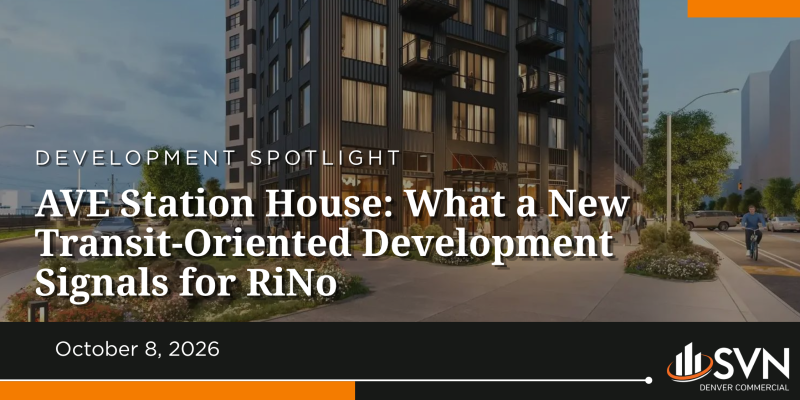
A long-vacant triangular site near Denver’s 38th & Blake station is finally taking shape.
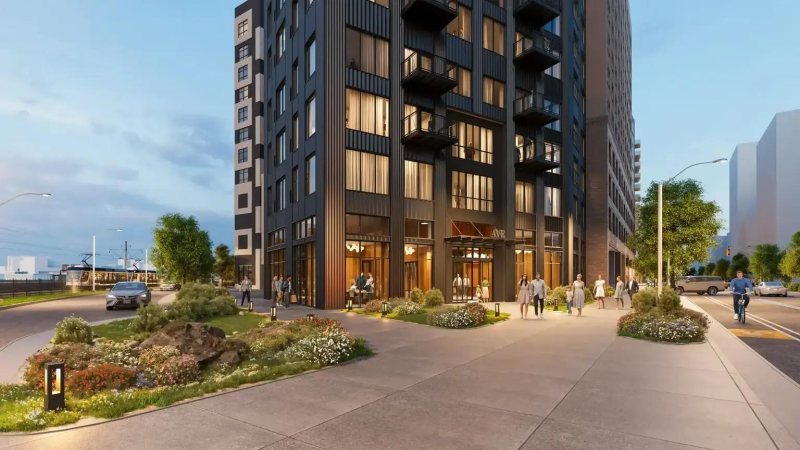
AVE Station House, a 13-story mixed-use development at the edge of RiNo, broke ground in April 2026 and is now rising near one of Denver’s most important transit nodes. The project is planned to bring 301 residential units, more than 11,000 square feet of ground-floor retail, and more than 18,000 square feet of indoor and outdoor amenities to the area.
The latest renderings show how the project is intended to function as more than a residential tower. Street-level retail, shared resident spaces, work areas, fitness and wellness amenities, and rooftop gathering spaces are integrated into the development’s design, reinforcing its transit-oriented and mixed-use character.
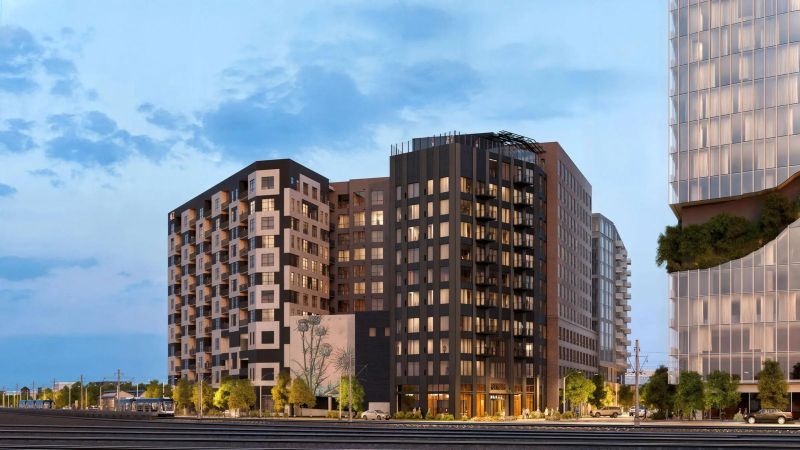
AVE Station House: From Long-Vacant Site to Transit-Oriented Development
The triangular parcel has remained one of the more visible undeveloped sites around the 38th & Blake station as RiNo continued to transform around it.
Now, construction is underway on a project designed around the advantages of its location: proximity to commuter rail, access to downtown, and a neighborhood increasingly defined by housing, employment, dining, entertainment, and creative uses.
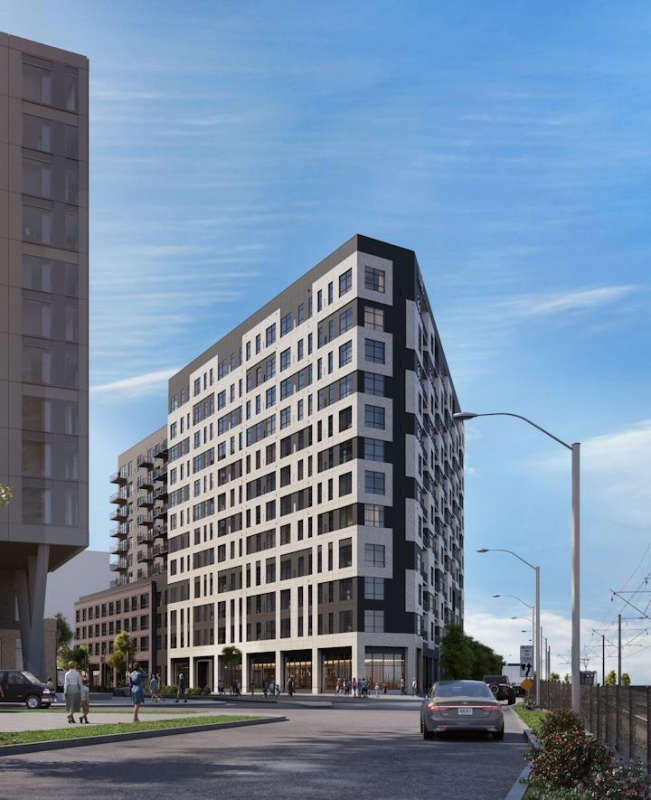
The development is planned with studios through three-bedroom residences, structured parking, EV charging infrastructure, and a broad collection of indoor and outdoor amenities. Planned features include coworking spaces, private work pods, fitness and wellness facilities, a rooftop pool and lounge, golf simulator, sports lounge, and pet amenities.
Approximately 10% of the residences are planned as affordable housing, adding another dimension to the project’s role within Denver’s evolving housing landscape.
For another look at how development is reshaping the district, see SVN Denver’s coverage of the Rock Drill redevelopment in Cole/RiNo.
Why AVE Station House Matters for Denver CRE
For commercial real estate, AVE Station House offers an example of how location, connectivity, and mixed-use density continue to shape development decisions.
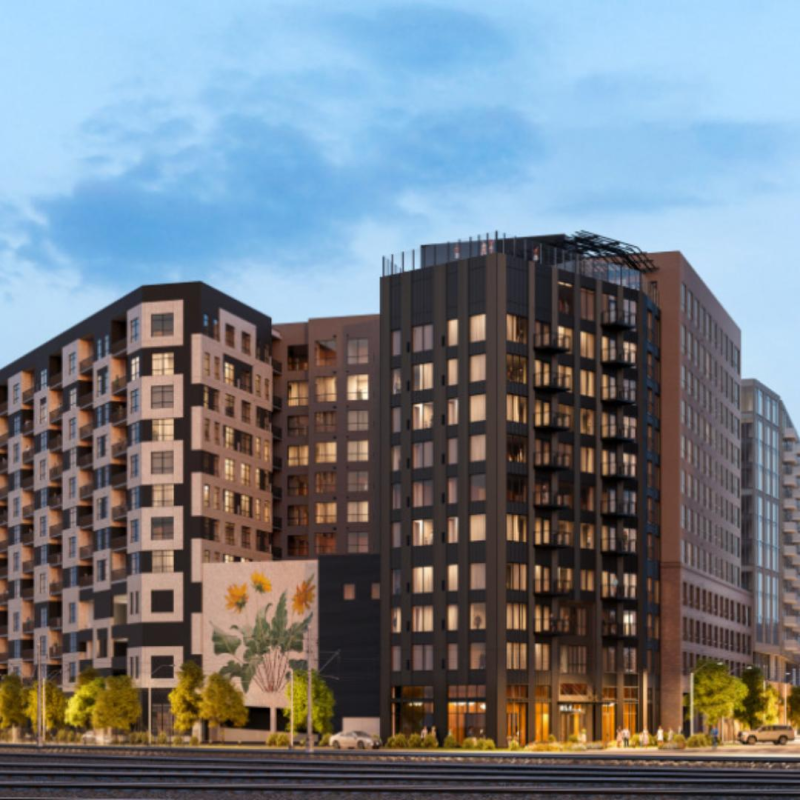
The project isn’t simply adding 301 apartments. It is adding residents, retail frontage, amenities, and activity around a major transit node—potentially increasing the number of people living, working, shopping, and spending time in the surrounding area.
That matters for more than multifamily.
As residential density grows around transit and established commercial corridors, surrounding retail, hospitality, office, and service uses can also be affected. For investors and developers, projects like AVE Station House provide another data point for understanding where demand and activity are concentrating within Denver’s urban core.
For additional market context, see SVN Denver’s Denver Q2 2026 multifamily market analysis.
Inside AVE Station House
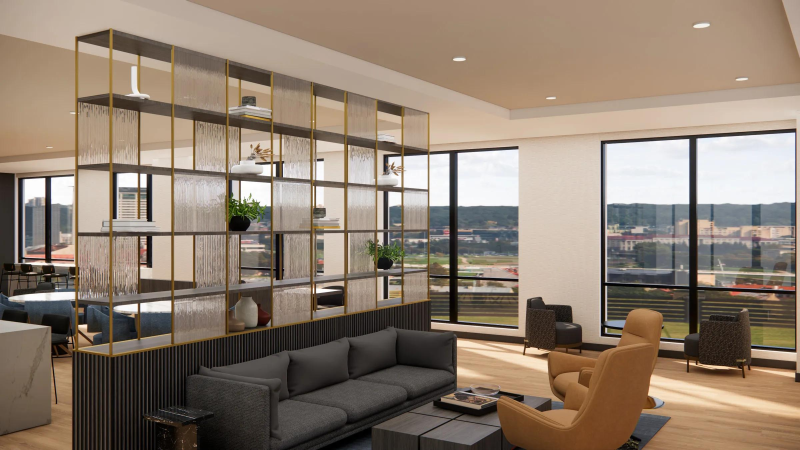
The project is designed to offer more than residential units. Planned amenities include coworking spaces, private work pods, fitness and wellness facilities, a rooftop pool and lounge, golf simulator, sports lounge, and pet amenities.
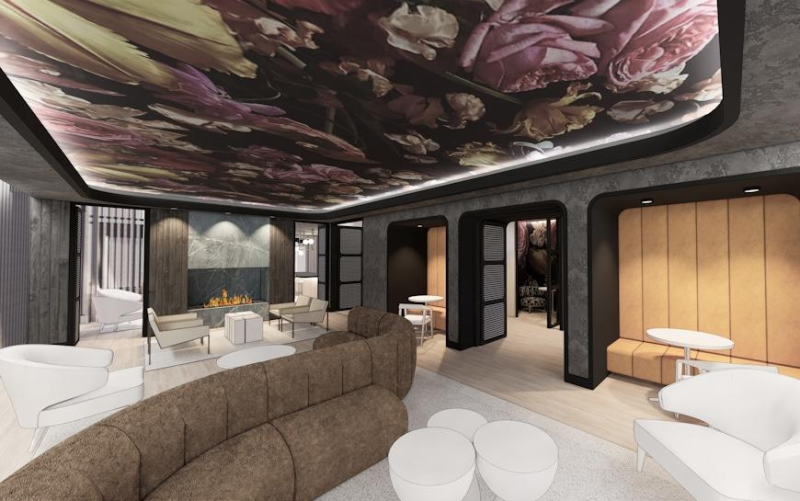
The inclusion of dedicated workspaces is particularly notable as multifamily developers continue to respond to changing expectations around where residents work, exercise, socialize, and spend their time.
Institutional Capital Is Taking Notice
The project’s momentum was reinforced in August 2026, when the development partnership secured $125 million in construction financing, including a $100 million senior loan from Madison Realty Capital and $25 million in subordinate financing.
The financing is another indicator of institutional confidence in the project’s location and development strategy. The project also marks RXR’s Denver debut as the company expands its multifamily platform into the market.
The Korman Communities AVE Station House groundbreaking announcement provides additional project details and development imagery, while Commercial Observer’s coverage of the $125 million construction financing provides further context on the capital behind the project.
The first residents are currently expected in late 2028.
What AVE Station House Could Signal for RiNo
RiNo has already evolved dramatically from its earlier industrial roots. AVE Station House adds another layer to that transformation: a high-density residential project intentionally positioned around transit and designed to combine housing, retail, and amenity space.
That combination matters because development doesn’t happen in isolation.
New residential density can influence retail demand. Transit access can affect how people move through a district. New amenities can change how residents and visitors use surrounding commercial areas. And significant construction financing can signal where capital sees longer-term opportunity.
SVN Denver’s RiNo office market analysis provides another perspective on how the neighborhood’s connectivity and continued development are affecting commercial real estate.
The Bigger CRE Question
For Denver CRE professionals, the more interesting question may not simply be what is being built?
It is:
What does the continued investment around 38th & Blake tell us about where Denver’s next wave of urban growth is taking shape?
AVE Station House offers one answer: density, transit connectivity, mixed-use development, and investment capital are continuing to converge in RiNo.
As the project rises toward its expected 2028 completion, the surrounding market will provide an opportunity to watch how those forces translate into demand for housing, retail, services, and other commercial real estate.
At SVN Denver, that’s the bigger story behind the development: not just what’s being built, but what it tells us about where the market is going next.