
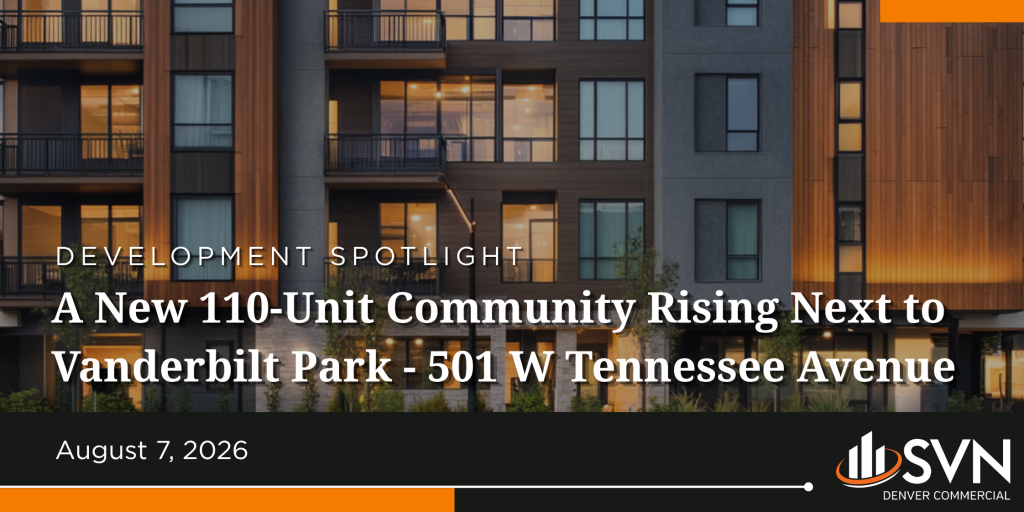
Denver’s affordable housing pipeline just picked up another notable entry, and this one comes with a park view. A new concept plan has surfaced for 501 W Tennessee Avenue, calling for a 110-unit affordable housing community on a site that backs directly up to Vanderbilt Park and the South Platte River corridor.
For anyone tracking multifamily activity in the Athmar Park submarket, this is a project worth watching.
The Concept
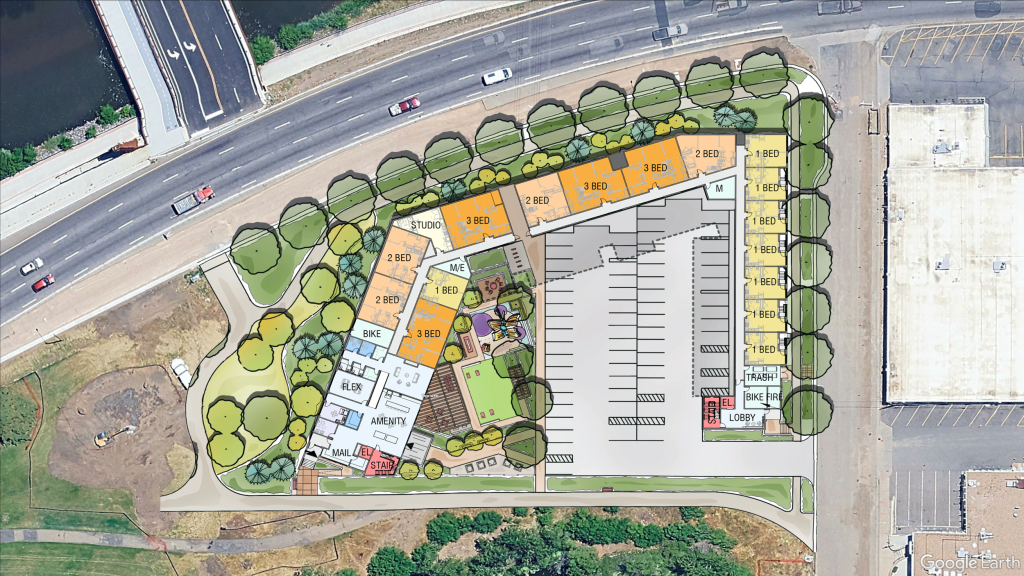
Early plans call for a four-story multifamily building wrapping around a central parking court, a layout that’s become a familiar and efficient template for infill affordable housing on tighter urban lots. What sets this site apart is its context: rather than being tucked into a purely residential grid, the building would sit shoulder-to-shoulder with one of the area’s larger public parks, with landscaped pedestrian connections proposed to tie the property directly into the neighboring park trail network.
That kind of park-adjacent siting doesn’t come around often for affordable product in Denver, and it’s the kind of amenity that private market developers typically pay a premium to be near. Pairing it with income-restricted housing is a meaningful signal about how the city and its development partners are thinking about equitable access to green space and river corridor amenities on the west side of town.
Where It Stands
The project is still early in the pipeline. It’s currently moving through the concept plan stage with the City of Denver, meaning design refinement, financing, and further city review still lie ahead before shovels hit the ground. As with most affordable housing developments of this scale, expect the project to be structured around Low-Income Housing Tax Credits as it advances.
Why It Matters for Athmar Park
Athmar Park has quietly become one of the more interesting neighborhoods to watch along the South Platte corridor, sitting at the intersection of established single-family blocks, river trail access, and steady infill interest. A 110-unit affordable development of this scale would be one of the more significant additions to the neighborhood’s housing stock in recent memory, and it reinforces a broader trend we’re seeing across Denver: developers and the city are increasingly targeting park- and trail-adjacent parcels for higher-density, income-restricted housing rather than reserving those locations exclusively for market-rate product.
For owners, investors, and brokers active in this corridor, it’s worth keeping an eye on how this concept evolves through entitlement and what it signals for surrounding land values and future development interest along West Tennessee Avenue.
What’s Next for Denver?
Stay tuned for more exciting development and redevelopment projects shaping the city.